
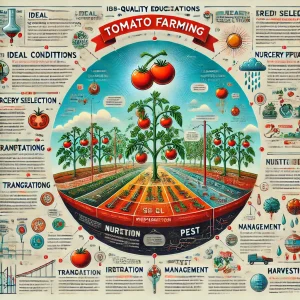
v Introduction to Tomato Farming
Tomato farming is one of the most profitable and widely practiced agricultural ventures globally. Tomatoes are versatile, nutritious, and high-demand crops used in salads, sauces, juices, and various culinary applications. Understanding the essential aspects of tomato farming ensures better yields, profitability, and sustainable production.
Ø Ideal Growing Conditions
- Climate:
- Tomatoes thrive in warm, sunny conditions.
- Optimal temperatures: 20–30°C (68–86°F) for growth; 13–21°C (55–70°F) for fruit setting.
- Frost and extreme heat negatively affect yield.
- Soil:
- Well-drained loamy soil with good organic content is ideal.
- pH range: 6.0–6.8.
- Good drainage is crucial to avoid root rot.
- Sunlight:
- Requires 6–8 hours of direct sunlight daily for optimal growth.
Ø Varieties of Tomatoes
Tomatoes are broadly categorized into:
- Determinate (Bush type) – Compact growth, matures early, ideal for processing.
- Indeterminate (Vine type) – Continuous growth, higher yield, requires staking.
- Heirloom vs. Hybrid – Heirloom varieties offer rich flavor; hybrids provide better disease resistance and productivity.
Popular varieties include:
- Roma (Plum) – Great for sauces and pastes.
- Beefsteak – Large and juicy, perfect for slicing.
- Cherry and Grape Tomatoes – Small, sweet, and perfect for salads.
Ø Watering Requirements
- Tomatoes need 1–2 inches of water per week depending on climate conditions.
- Drip irrigation is recommended for efficient water use and reduced disease risk.
- Overwatering can cause root diseases, while underwatering affects fruit development.
Ø Nutrient Requirements
Tomatoes require balanced macronutrients:
- Nitrogen (N) – For healthy foliage.
- Phosphorus (P) – Essential for root and fruit development.
- Potassium (K) – Improves fruit quality and disease resistance.
Regular soil testing helps optimize fertilizer application.
Ø Pests and Diseases
Common pests:
- Aphids, Whiteflies, Tomato Hornworms.
Common diseases:
- Early Blight, Late Blight, Fusarium Wilt.
Preventive practices:
- Crop rotation, mulching, and the use of resistant varieties.
Ø Economic Importance
- Tomatoes are one of the most consumed vegetables globally, with significant export potential.
- High demand in the food processing industry (ketchup, sauces, pastes).
- Can be grown in open fields, greenhouses, or containers, offering flexibility for farmers.
Post Views: 405